

What's in a survival kit?
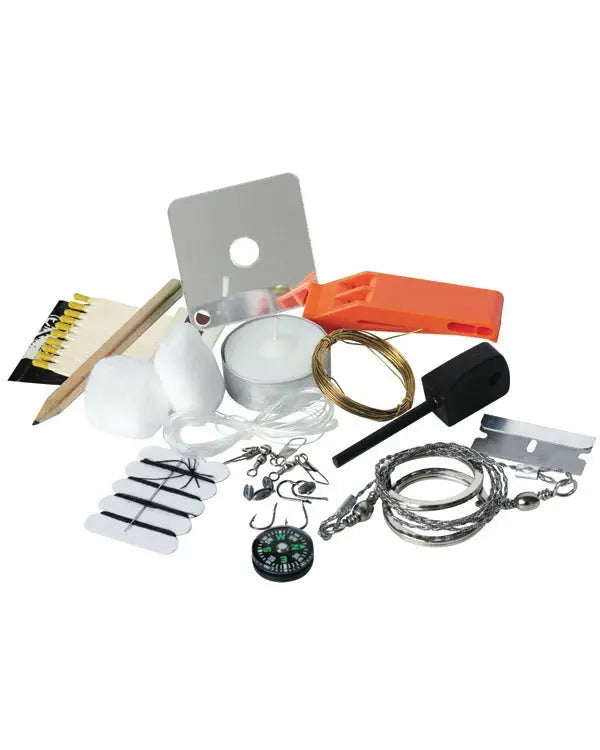
Most of our kits are built around the same jobs, packed into a tin, a pouch or a dry bag:
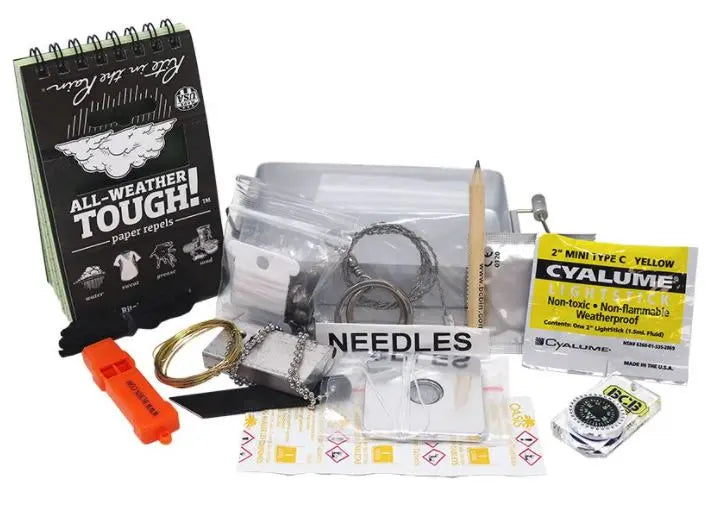
- Fire: a flint and striker, matches and a candle or tinder. A flint still lights in the wet when matches won't, but it takes practice.
- Water: purification tablets and a water bag in most kits. Tablets treat water against germs, but they don't remove dirt or chemicals, so filter cloudy water first. Our water filters pair well with them.
- Signalling: a whistle and a signal mirror. In Britain, the mountain distress signal is six blasts on a whistle, a minute's pause, then repeat.
- Warmth: a foil blanket or survival bag in several kits, to hold in body heat if you're stuck waiting.
- Repairs and tools: a wire saw, a small blade, a sewing kit, cord and tape.
- Navigation: a button compass. It's a backup for a proper compass and map, not a replacement.
Which kit?
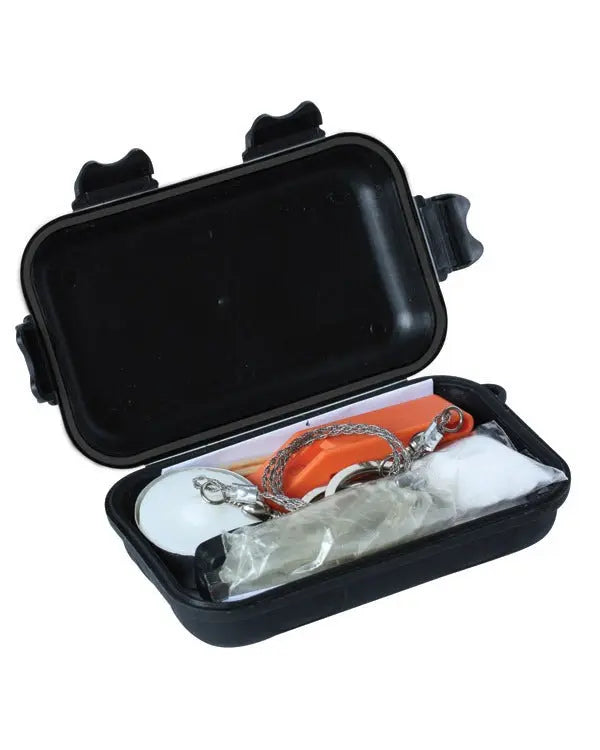
- Kombat Survival Kit: the smallest and simplest, in a waterproof plastic case. Fire, signalling, fishing and sewing basics, with no water tablets.
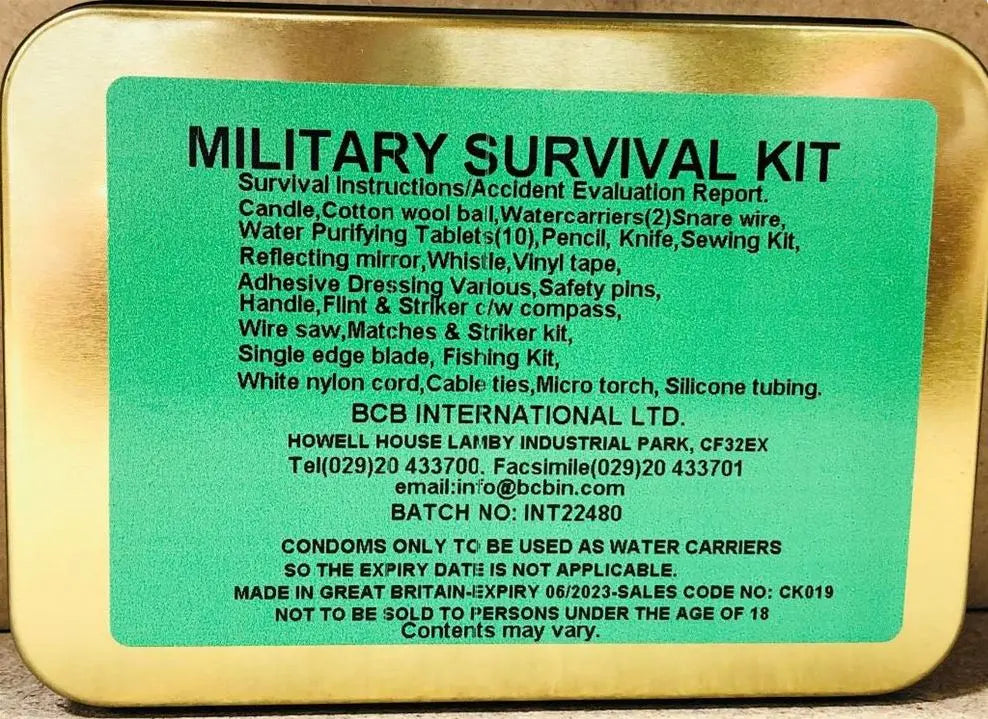
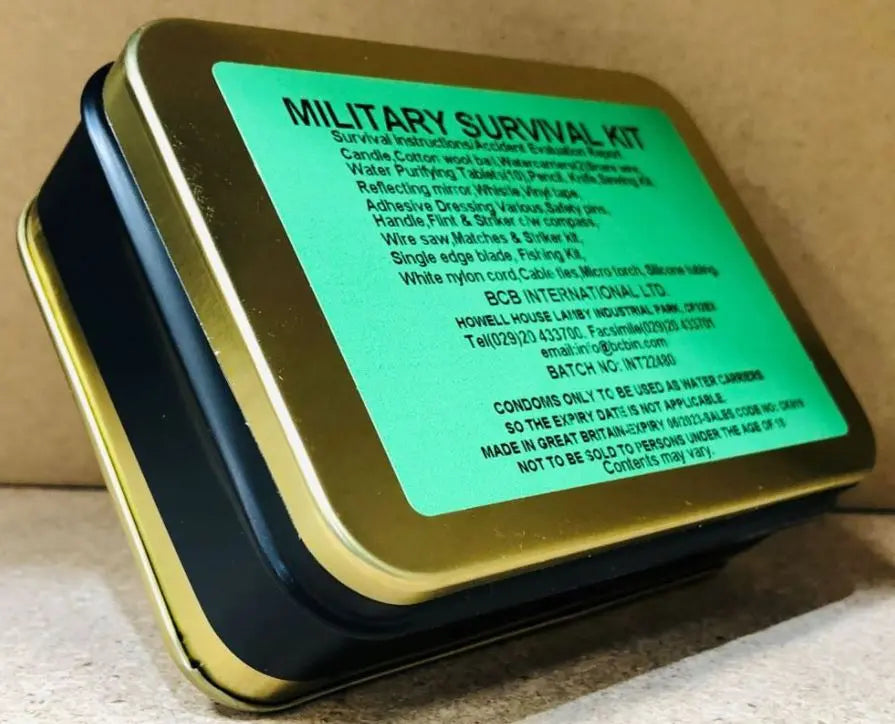
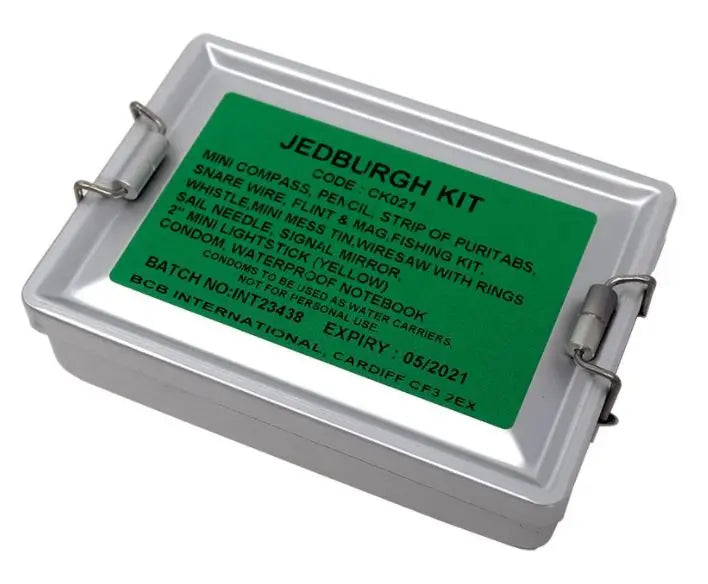
- BCB Military Survival Kit: a 220g tin that fits a jacket pocket (110 x 80 x 28mm), with the widest spread of kit for its size, including water purification tablets, a micro torch, plasters and a knife.
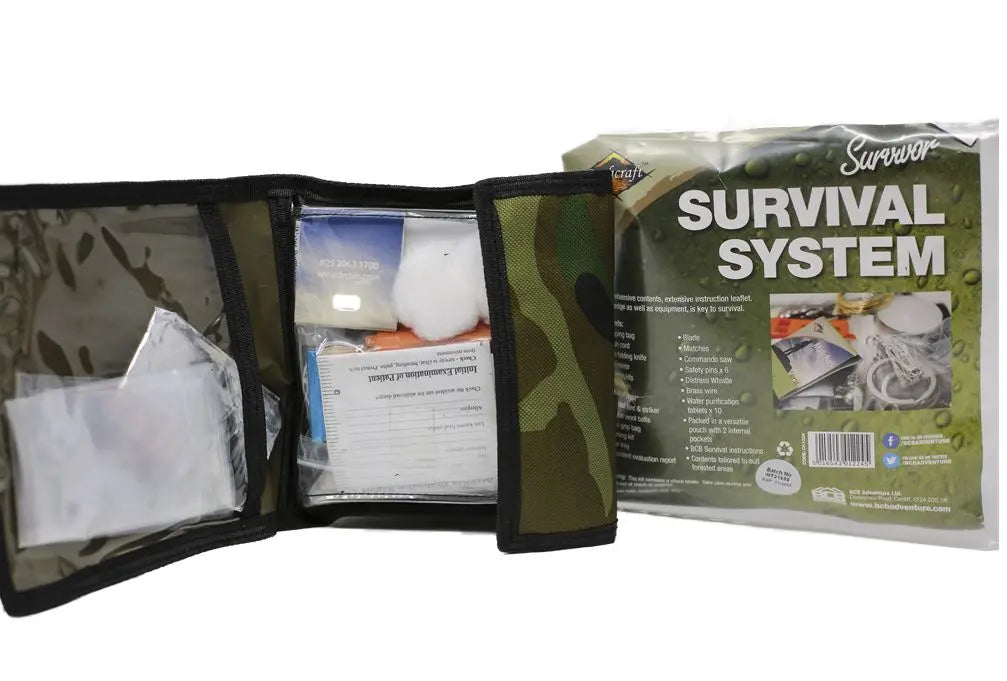
- BCB Survival System Kit: the same idea in a woodland-pattern belt pouch, with water tablets, a thermal survival bag and a foil tray.
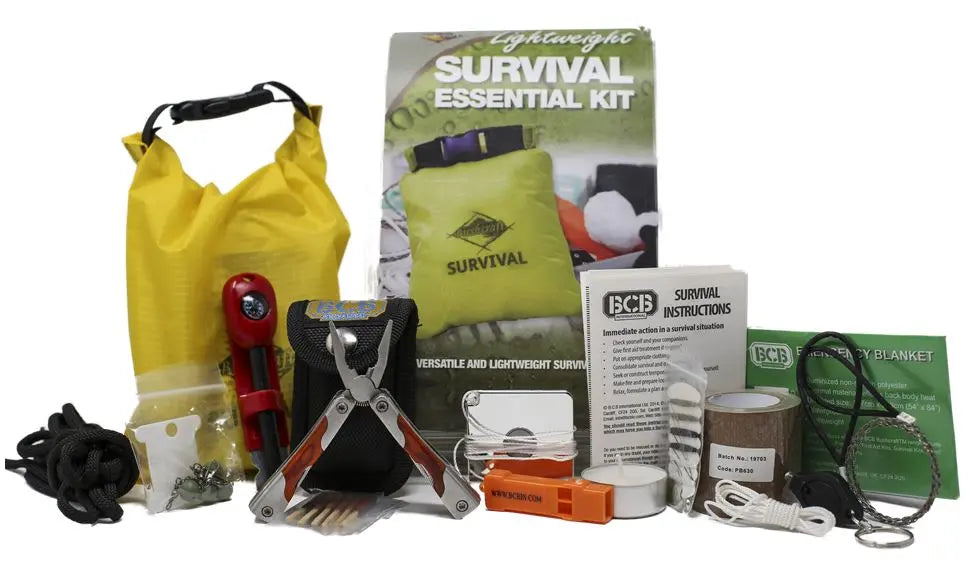
- BCB Survival Essentials Kit: a roll-top dry bag (360g) with a space blanket, mini multi-tool, waterproof matches, duct tape and a micro torch. There are no water tablets, so add your own.
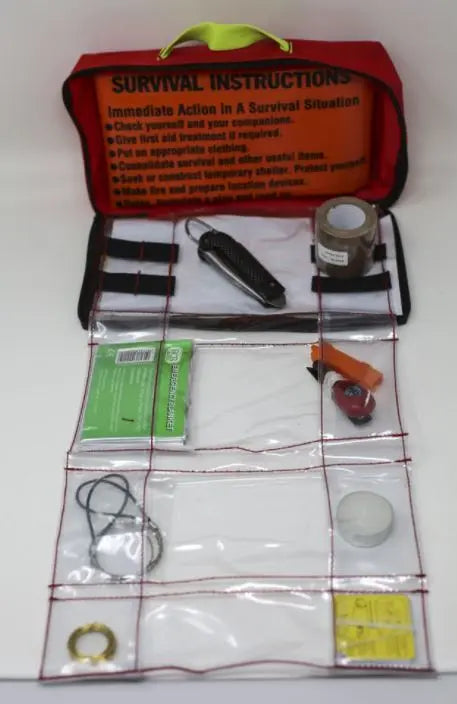
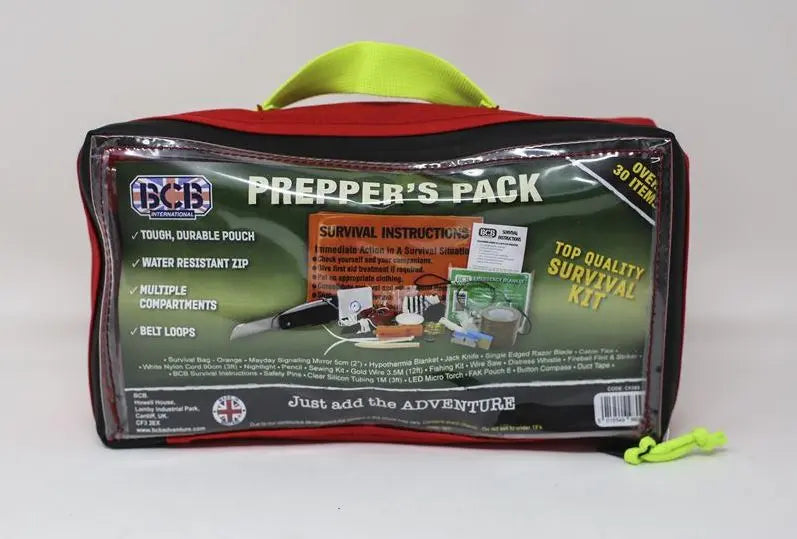
- BCB Prepper's Pack Survival Kit: the largest, with 21 pieces in a fold-out nylon pouch with clear pockets (26 x 14 x 7cm, 750g), including a survival bag, foil blanket, jack knife and compass. Made in Britain.
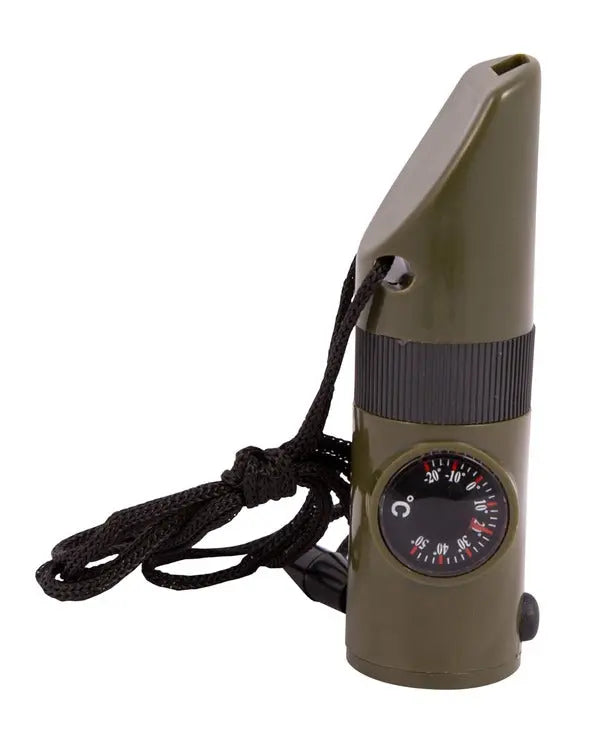
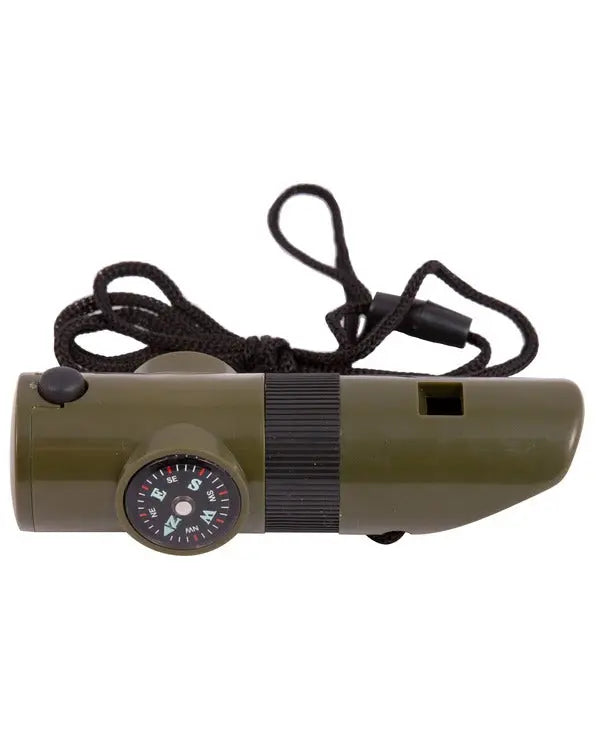
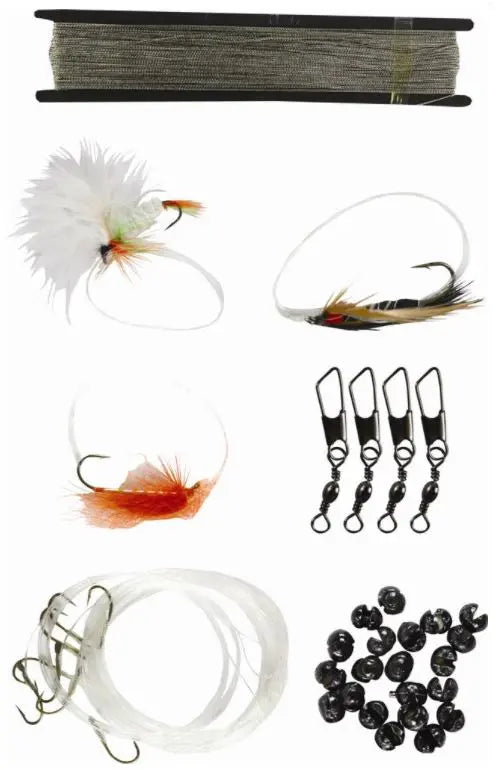
For single items, the 7-in-1 whistle and the NATO liferaft fishing kit are here too.
A home emergency kit is a different job
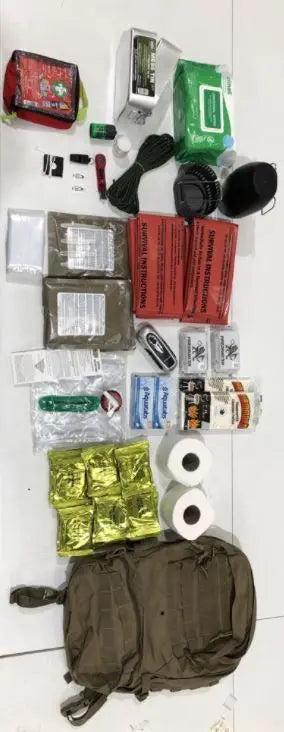
Pocket kits are made for being outdoors. For a long power cut, a flood or a few days without mains water, what helps is everyday supplies kept together in one place. A sensible place to start is three days of:
- Water: bottled water, with a filter or water container as a backup.
- Food: things that need no cooking, or just hot water, like our freeze-dried meals and ration packs.
- A radio: a wind-up or battery emergency radio, for BBC Local Radio on FM.
- Light: torches and spare batteries, rather than candles.
- First aid: a first aid kit and any medicines you take.
- The rest: a charged power bank, some cash, copies of important documents and warm layers.
Keep it in one bag near the door, so it's easy to pick up if you have to leave.
Getting the most from a kit
- Open it once: know what's inside, and practise with the flint and striker before you need them.
- Check dates once a year: water tablets and plasters have use-by dates.
- Add your own: any medicines you need, a phone charger and a ration bar or two.
Questions about a kit? Ask us before you buy. We reply within 24 hours, every time.

SGT PREPPER SHOP REVIEWS

Why Choose Sgt Prepper Shop?
Response Within 24 Hours
No bots, no silence. Whether you reach out by email or phone, you’ll get a clear, helpful reply from a real person - always within 24 hours.

Trusted by UK Preppers
Our reviews speak for themselves. Customers choose us for our service, speed and no-nonsense approach to prepper gear.
See All Reviews
30-Day Guarantee
Not happy with your order? Return it within 30 days for a full refund - no fuss, no hassle.
Sgt Prepper's Have Been Mentioned In The Media Outlets Below